Field patient monitoring & documentation

The record starts
at the scene.

One system, two parts: a neck-worn sensor that measures the patient, listens to the medic and writes the record onto itself, and an app that reads the whole session off it on arrival. Any patient. Any scene. No network required.

5signals fused
0infrastructure
1system, scene to ER
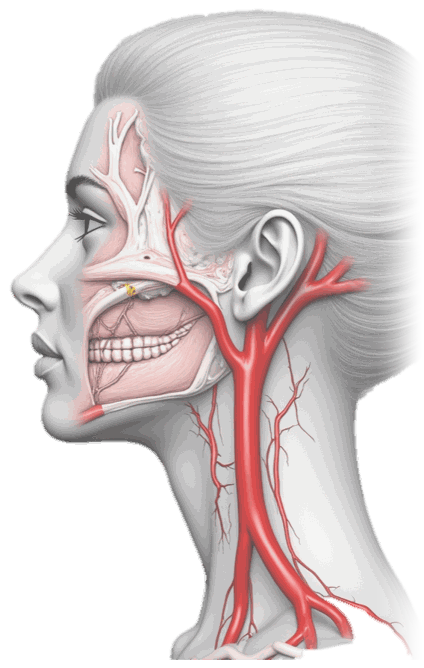
The PulSight sensor worn on the lateral neck, over the carotid
The reality in the field

Medical decisions must be
fast and informed.

In the field only the first half is possible. Nothing is measured into a record, nothing is documented. The first responder is saving a life right now, with nothing to hand the team that will try again an hour later.

The problem
0%

of critical field data is lost during handover

EMS, military, disaster response. The medic sees it. The hospital never does.

The gap
0

tools that collect the data automatically:
for a combat medic, a paramedic, a soldier, any first responder

Vitals are scattered. Notes are verbal. The care chain is blind. Until now.

How it works

How PulSight works: introductory film

PulSight01:10
Read the transcript

Narration. In the chaos of trauma, every second matters. Lives are at stake. Decisions must be made, fast.

But in the field, vital signs can be hard to measure. Equipment is slow to apply, fragile, often inaccurate in trauma patients, requiring medical knowledge and medical personnel attention intended for one casualty only, and the treatment is not documented.

PulSight, the world's first autonomous, wearable trauma monitor with treatment documentation. Simply applied on the neck above the carotid artery, PulSight delivers real-time, color-coded vital signs, instantly.

PulSight can be used in every trauma scenario: from civilian casualties to mass casualties in combat events. No delays. No guesswork. Just the critical data, exactly where it's needed, on the patient.

It listens, records, and builds a treatment record from the field to the hospital door. PulSight is your guard and brings reassurance: certainty in uncertain acute situations. PulSight. When every heartbeat counts.

On screen. Dramatised footage of military and civilian trauma care: medics treating casualties in the field, an aircraft-incident scene, a hospital ambulance transfer, and an animated PulSight sensor on a patient's neck showing heart rate, oxygen saturation, respiratory rate and blood pressure, followed by the PulSight logo.

The device

Measure. Listen.
Remember.

One device captures everything: physiological data, verbal medical notes, and a complete record stored on the sensor itself.

The sensor is worn on the lateral neck, over the carotid
  • Heart rate
  • SpO₂
  • ECG · respiration
  • BP trend · shock index
The app

Colour on the patch.
The whole story in the app.

Hold a phone or tablet to the patch on arrival. The full session transfers in seconds, already written, already structured.

Read it off the patch

No account, no upload, no waiting for a network. The session lives on the device until someone reads it.

Nobody types it up

The signal stream and the medic's spoken notes are already fused into a timestamped pre-hospital record.

Replay the scene

Scrub the fourteen minutes back and forth. Evidence, not recollection.

iOS & AndroidTablet & phoneWorks offlineExport to EMR
4 sensors in range · site Alpha LIVE
LIVE · 4A-2291
117bpm
SpO₂95%
RR22
B.P110/70
S.I1.06
STABILISING
Where we are

Built. Backed.
Moving.

A working device, real field partners, non-dilutive funding and patents on file. The round is live and half-committed.

01
Working

Functional prototype

ECG, SpO₂, PPG, IMU and voice in a single neck-worn sensor, running end to end.

02

Design partners

Magen David Adom, the largest EMS organisation in Israel, and an elite IDF unit, both engaged as design partners for field validation.

03
Awarded

Israel Innovation Authority

Non-dilutive IIA grant awarded, recognising national strategic value.

04

Technion-backed

Incubated and supported by Israel's leading engineering institute.

05

Patents pending

Filings covering the hardware, the signal chain and the clinical AI methodology.

06
50% anchored

Seed round open

Lead investor committed. Actively completing the round with strategic partners.

Working with Magen David AdomElite IDF unitIsrael Innovation AuthorityTechnion
Who's building it

We treated the patients.
We carried the radios.
We built the systems.

Frontline medicine, combat operations and deep tech: the three places this problem actually lives.

Eng. Maor Glasnip
CEO

Mechatronics engineer, IMOD & MedTech background. 3 patents from a prior medical device company.

EntrepreneurMedTechInternational businessIMOD
Eng. O Identity classified
VP R&D

Embedded systems engineer and edge-AI architect. Former senior engineer at Nvidia & Microsoft.

Edge AIEmbeddedR&D
Dr. Gil Dinur
VP Medical

Neonatologist at Rambam Medical Center. Combat physician, IDF reserves, 26 years of service.

ICU medicineCombat physicianTrauma
01

Continuous monitoring

The moment the sensor is placed on any field patient it starts collecting ECG, SpO₂, respiratory rate and blood-pressure trend, while simultaneously recording the medic's verbal assessment. No screens. No buttons. No training required.

Single-lead ECGSpO₂ · PPGResp. rateBP trend
02

Report on the device

On-device AI fuses physiological data with transcribed voice notes into a structured medical report, saved directly onto the sensor. No transmission system. No infrastructure. The record travels with the patient, on the patient.

Edge AI fusionVoice → textOn-board memoryWorks offline
03

Seamless handover

When the patient arrives at the ER the complete pre-hospital record is already there, on the sensor. The receiving team scans, reads and acts. No phone calls. No verbal relay. No lost data.

Scan on arrivalFull sessionExport to EMR
Get in touch

Let's talk.

Three ways in. Pick the one that fits.

Investor & partner

Investment, co-development or a strategic partnership with PulSight.

Request a demo

See the prototype work: video walkthrough or on-site.

Join the team

Hiring across engineering, clinical and ops.

Message sent.

It has reached us. We reply within 1–2 business days.